
After Sangin - Part 8
And Guess What? We Left.

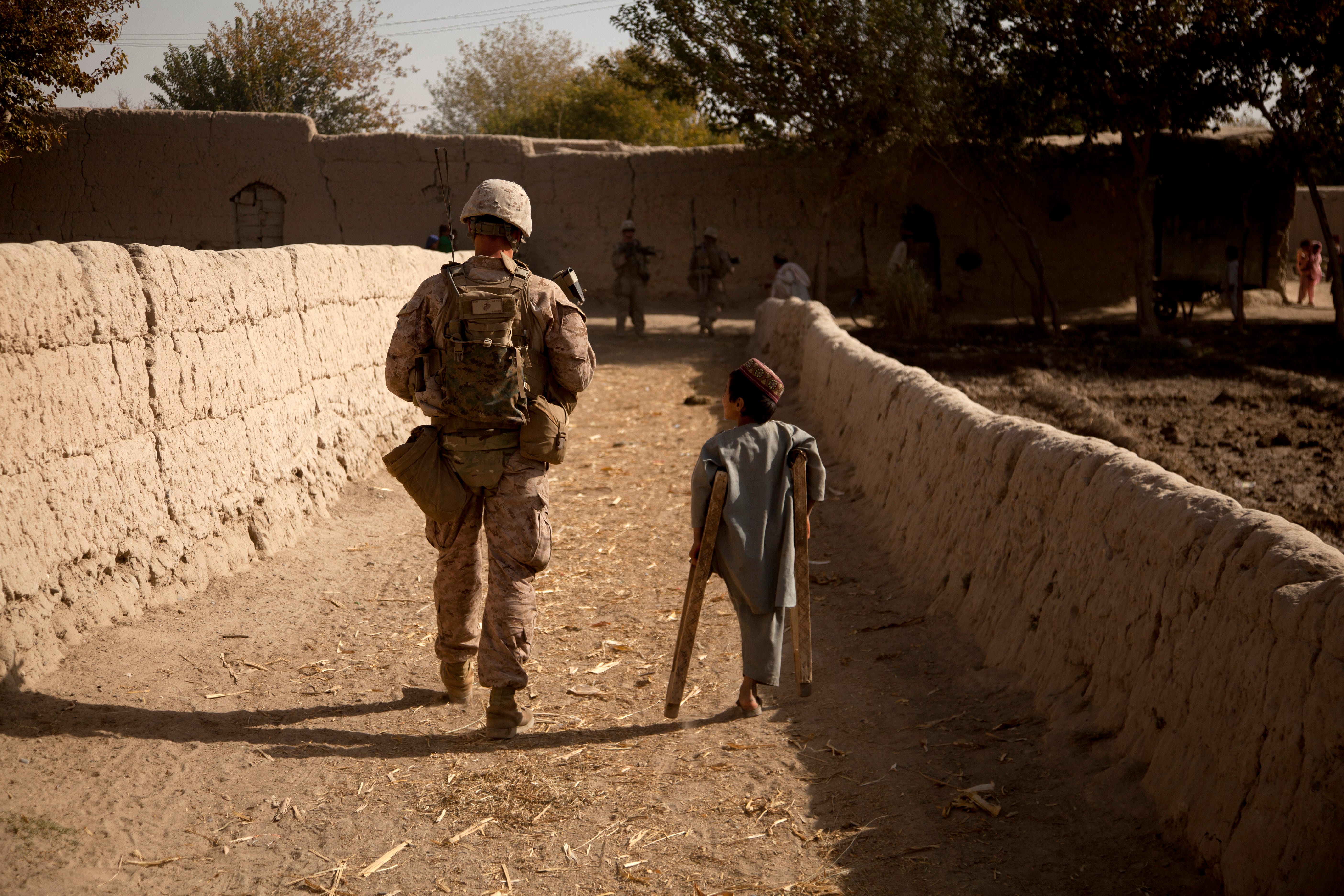
The will of the Afghans in Sangin – friendly and enemy; civilian, military, and Taliban – was seemingly unbreakable.
Like the Iraqis we worked with previously, the Afghans were survivors. They had outlasted the Russians; they outlasted the civil war that followed. They had likewise outlasted our British predecessors. It didn’t take long to realize they would outlast us too.
Our goals in the district were valid; our intentions were pure.
To the Marines, the issue was straightforward: the Taliban was the enemy, we were the good guys with the white hats, and the only logical path for Sangin’s civil and military leaders was to side with us in eradicating the Taliban.
But to the locals, the Taliban weren’t necessarily faceless boogeymen. To be sure, there were some out-of-area hardcases in the district. But many – if not most – were local boys.
Whether it was the hardcore fighters who were deeply committed to the cause or the “ten dollar-a-day Taliban” lackeys who were laying IEDs or collecting on us purely for financial gain, most were individuals known throughout the community.
To the rank-and-file Afghan, the notion of turning in friends or family to the Americans was absurd. In their minds, local boys could solve local problems.
That extended to the district police and Afghan army forces garrisoned in Sangin.
Some policemen and soldiers indeed hated the Taliban, who had murdered or intimidated friends and family as warnings not to collaborate with the Marines.
But others, including many senior uniformed leaders, were either somewhat sympathetic to the Taliban’s plight or simply happy doing as little as possible as long as the gears of the graft and corruption machine kept turning.
The corruption often seemed worse than sympathy or aid to the enemy.
Everyone understood that corruption – bribes, skimming, cronyism – wasn’t only rampant but was also an indelible aspect of Afghan culture. Much of the time it was easier for the Marines to tell the local military and law enforcement leaders to simply stay the hell out of the way if they weren’t going to expend the effort to do it right.
More difficult to deal with, however – and impossible to ignore – was the flagrant abuse of children by many Afghan leaders.
Several were widely recognized pederasts who made no attempt to hide their young “jingle boys” whenever we showed up. The Marines protested to me; I protested to my higher headquarters.
How can we work with someone so morally and ethically bankrupt? I asked. How can we partner with a known predator?
The silence from above was deafening.
We can’t pick our partners, they told me. We can’t impose our value system on them. The message was clear: shut up and color.
The result was untold numbers of Marines, me included, who returned home burdened by the emotional scars of indirectly supporting institutional child abuse.
#
Indeed, the Afghans were survivors, and when it came to working with the Americans in Sangin, they knew the only way to survive was to straddle the line.
For the valley’s denizens, the idea of generational trauma was a real thing.
With each successive occupation of their land – the Russians, the Brits, and now the Americans – there were bold promises of a new order, a new way of life for the downtrodden Afghan villagers.
What they got instead, year after year, were broken promises, escalating violence and corruption, and the gradual fracturing of their society.
We saw it in the empty stares of the villagers, as well as the often-erratic behavior that led them to say and do questionable – often hostile – things in public.
When pressed, the elders would typically attribute behaviors such as emplacing IEDs to various forms of mental illness – what the locals referred to as “Pakistan crazy” (someone who had spent too much time across the border) or “Russian crazy” (someone deeply scarred by the Soviet occupation).
As the population aged, Russian crazy eventually morphed into “British crazy” and “Marine crazy.” They all represented the same thing: the unending presence and influence of foreigners had created a multigenerational, negative imprint on the Afghans.
In many regards, the Afghans were simply hedging their bets, keeping both sides appropriately satisfied until they could figure out who would be the last man standing.
It didn’t take a genius to determine which way they leaned.
The Taliban were there before us; they would likely still be there after we left. The locals in Sangin were accustomed to the clockwork rotation of the Marine deployments; they knew our timetable.
They also knew our penchant for trying to make a mark in seven months through high enemy body counts and quick wins with civil affairs projects.
More important, they also knew what Charlie Wilson had known: that we would eventually leave.
“That’s what we always do,” he said. “We always go in with our ideals and we change the world. And then we leave. But that ball, though, it keeps on bouncing.”
The Afghans knew this to be true, despite our protestations to the contrary, despite our promises that the Marines would stay in Sangin until the job was done.
They knew.
And guess what? We left.
#
There’s no other way to say it: Sangin broke my heart.
It wasn’t one single thing.
It wasn’t a bad shoot.
It wasn’t relieving leaders who weren’t cutting it.
It wasn’t the wounded and dead civilians, or the maimed, abused, and ill-fated children.
It certainly wasn’t the tally of enemy fighters we killed, nor was it the progression of casualties my Marines suffered along the way.
It was the amalgamation – the compounding – of it all.
The overwhelming majority of Marines, me included, wanted nothing but peace and stability for the people of the valley. We just wanted to help. But that wasn’t good enough.
In the end, nothing we did – nothing the Coalition did – was good enough to make a lasting, positive impact in Sangin. Or in all of Afghanistan for that matter.
As a nation, we committed to seeing it through to the end, but we didn’t. That’s something we will have to live with.
Now, in the aftermath of our 2021 withdrawal, when I think about those we left behind – and I consider any future misadventures our country might undertake as we did in Iraq and Afghanistan – I can only ask myself one thing:
How will anyone ever trust us again?
# # #
I have read your series with interest and in some cases deep frustration. I am a believer in Punitive Expeditions to punish for some particular act like harboring terrorists. I do not believe in nation building in nations where our culture and values are as incomprehensible to them as theirs are to us. There are few cultures further apart thanAfghanistan and modern America. You must be clear why you arrived and what you expect after departure. Very simple. Our nation and leadership just can’t help themselves in trying to impose change on the unwilling.
In the course of these efforts it is Marines who pay the price for flawed foreign policies and the imposition of our culture or what foreigners perceive our culture to be. I served on active duty as an infantry officer for 26 years retiring in 2000 and my sons were Marines as well serving a combined five tours in Afghanistan and Iraq. We follow orders like my father before me did. That our civilian masters could not care less and that their strategies and policies are bankrupt matters little other than the bitter reflections of survivors.
I believe we were once the most admired nation on earth for our larger values but exchanged those for newer cultural values that are rejected by most of the planet. Their views of us are formed by Hollywood and our unofficial spokesmen in academia, the media and entertainment industry. These cultures reject our excesses.
It was said about Russians that they’d prefer oppression from their own than a fair deal by foreigners. They are not alone.
The soul crushing humiliation for me is not that we fought in Vietnam, Beirut or Afghanistan but the way we departed in each case. Those betrayals and indifference were the insults that trumped our losses.
Thank you for taking the time to open old wounds and write your narrative. I hope it is cathartic and brings you peace. It is the warrior’s lament over the centuries.
We were the willing, sent by the self serving, to do the unnecessary for the ungrateful. Our honor is undiminished.