
After Sangin - Part 7
Bloodless Victories

There was never a true victory over the IEDs that plagued us, but we came as close as we could to winning the counter-IED fight.
Ever since the 2003 Iraq invasion, the fighting load Marines shouldered had increased at what seemed like an exponential rate. For a time, body armor got heavier, not lighter.
With the addition of thick armored ceramic plates covering our chests, backs, and sides, as well as throat and groin protection – which eventually expanded to silken, spandex-like “blast boxers” and bulky Kevlar “blast diapers” – the chances of surviving a hit increased.
The opposite was true too: any reduction in weight – and with it, protection – meant you were nimbler on your feet, less fatigued mentally and physically, and therefore less likely to get hit in the first place… but your chances of survival if hit dropped significantly.
In most cases, Marines who triggered IEDs survived because of their armor and our ready access to speedy medevac and trauma care resources. The trade-off, however, was that single-, double-, and, in some cases, triple-amputations, were the norm.
By mid-deployment, 3/7 was losing, on average, a Marine each week to serious wounds and deaths from IED detonations.
It was unsustainable.
The Marine Corps and the Joint community heaped counter-IED equipment on us by the truckload, adding to an already brutal fighting load.
The equipment ranged from the exquisite – portable contraptions the Marines wore on their backs to counter remote-controlled devices – to the rudimentary – telescoping PVC poles topped with ridged hooks known as “Holly sticks” to “interrogate” suspected IEDs from a safe stand-off distance.
None of it solved the problem the way our higher headquarters had envisioned.
Again, it briefed well: arm the Marines with the tools they needed to defeat the IEDs. But most explosive devices in Sangin were generally victim-operated – not remote-controlled – and the Holly sticks often became crude instruments for the Marines to fiddle with a suspected device after finding it rather than wait for our EOD team to arrive and deal with it appropriately.
Counter-IED equipment and increased Kevlar protection weren’t going to solve the problem. In the end, it came down to one of our planning teams to attack the issue.
After weeks of hard work processing months of data, the planning team concluded that the Marines were encountering IEDs because they were moving tactically throughout the battlespace – exactly the way we had trained them. They passed through dense tree lines in single file, they took untraveled paths, and they closely paralleled canals and levees.
The Taliban had recognized this, adapted, and was now using our tactics against us.
The key, then, became for the Marines to move where the local population moved. Our adversaries knew not to endanger civilians intentionally, lest the locals come over to our side because they were triggering IEDs meant for the Marines.
The solution had been staring us in the face, but we were unable to see it until we took the time to step back from the matter and analyze all aspects.
The planning team published a “best practices” manual, the companies embraced it, and almost overnight our IED strikes dropped dramatically. They still happened, and casualties continued until our last weeks in the valley, but not at the alarming rate we had experienced in the first half of the deployment.
#
The district’s approaching elections loomed over us throughout our tour.
We feared a repeat of 2010’s election day, when 3/7 had fought skirmish after skirmish against a Taliban force determined to disrupt the electoral process.
Once the district elections were upon us in the spring of 2012, we accelerated our turnover with the ANSF forces throughout the valley. The Marines worked together with their Afghan partners to develop a comprehensive security plan, and by election day we had what we thought was a workable strategy.
The ANSF would handle the inner security cordon inside the district center, where locals were casting their votes. The Marines, meanwhile, would flood the rest of the valley with patrols to thwart any enemy attempts to get to the district center, thereby enabling the villagers to make it to the ballot box.
To give the election the necessary legitimacy to succeed, we forbade the Marines from operating anywhere near the voting centers. We monitored our ISR feeds and radio reports from the patrols all day, nervously awaiting news of enemy contact in the village or the detonation of a suicide bomber in the crowded district center.
But the bad news never came.
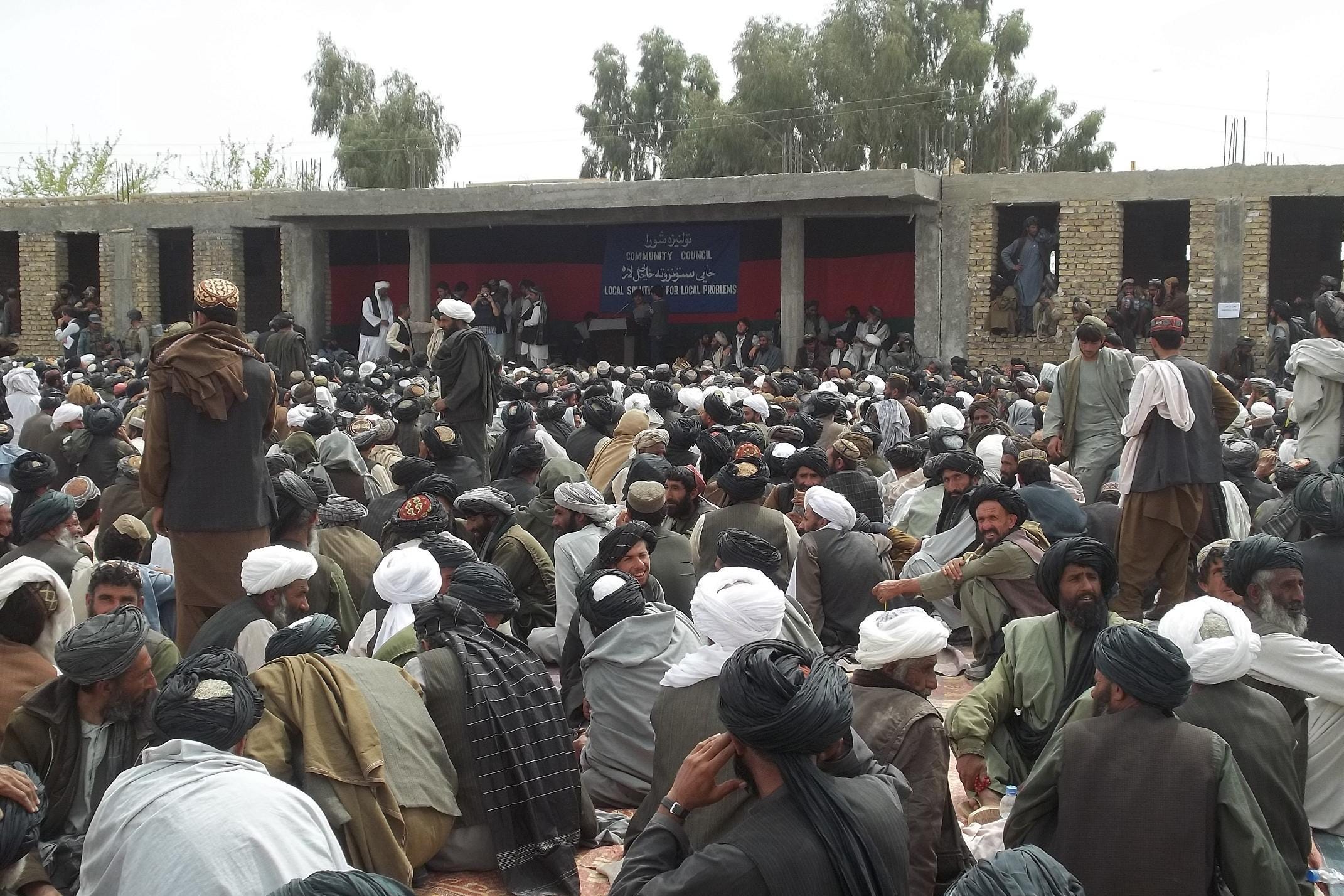
The election went without a hitch – without the anticipated bloodshed – and by day’s end Sangin had a newly elected district community council. It was, perhaps, 3/7’s greatest achievement during our seven months in the valley – bloodless and drama-free as it was.
And, we all knew, it wasn’t 3/7’s victory alone.
The battalions that preceded us had set the conditions for us to build upon. It was something rare in the iterative deployment cycles of the Long War: a continuous, multi-year campaign where the labors of one unit don’t bear fruit until another unit’s watch.
# # #
Stay tuned for Part 8.